
AQUILA
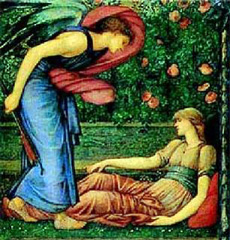
The true work of art is but a shadow of the divne perfection. Michelangelo Buonarotti |
The Art |
Back to INFORMATION |
The first permanent photograph was made by Joseph Niepce around 1827 using a sliding wooden box camera manufactured by Charles and Vincent Chevalier of Paris that he had modified. Whilst this was a huge step forward in our ability to quickly record our world, the earliest cameras were very large, which made them impractical for common use. By the middle of the 19th century, bulky but usable 'portable' cameras were available; these cameras required relatively long exposure times, resulting in portraits and photographs featuring our serious ancestors, and blurry animals and plants. The techology advanced rapidly, however, and by the late 1800s and early 1900s, small portable cameras with mechanical shutters and using film were available. Before, and well into the 1800s, the only way to record our world visually was through art; the work of painters, sculptors, sketchers etc (and the patrons that made that work possible) allow us a glimpse of the past. The images that have been captured are not as 'perfect' as those captured by the lens of a camera. Each work of art has been affected by various factors: the technical skill of the artist and his knowledge of his subject, and the extent to which he must flatter his subject or adjust his work to meet the fashions of the time. These 'flaws', however, can provide us with just as much insight into the past as the images themselves. The images that we have included here seemed appropriate, but also show the development of riding as an art to some extent. Different styles of seat can be observed, various contraptions and training aids, and the odd archaic bit of husbandry. The only thing that is certain is that it is most important to be shown in Levade where ever possible. An heroic pose, to be sure! |
|
| The Artists: |
| Anonymous (The Alexander Mosaic) |
| Some information coming soon |
| Anonymous (Les Poulains) |
| Some information coming soon |
| Lukas Cranach the Elder |
| Some information coming soon |
| Leonardo da Vinci |
| Some information coming soon |
| Edward Burne-Jones |
| Some information coming soon |
| George von Hamilton |
| Some information coming soon |
| Theodore Gericault |
| Some information coming soon |
| Jacob Jordaens |
| Some information coming soon |
| Johann Elias Ridinger |
| Some information coming soon |
| Georg Simon |
| Some information coming soon |
| George Stubbs |
| Some information coming soon |
| Diego Valezquez |
| Some information coming soon |